
Unseen, Unheard, Unprotected

Unseen, Unheard, Unprotected When we talk about domestic abuse, most people picture city life, close neighbours, public services, and quick escape routes. But what happens when that same abuse is unfolding in a remote village, away from the nearest town, and without a soul around for miles? That’s the harsh reality. Domestic abuse exists everywhere, including rural areas, and its effects are often far-reaching. It is time to take a closer look at what is really going on and understand the challenges faced by those affected. The Hidden Reality of Rural Abuse Abuse in remote areas is frequently a subtle, hidden force rather than simply a violent act. Many people think that rural areas provide a secure haven because of their beautiful scenery and connected communities. For individuals who are abused, however, the situation is quite different. Lack of privacy, lack of support options, and transportation barriers make it more difficult for victims to escape their situation. In reality, survivors of abuse in rural areas frequently encounter more barriers when attempting to get assistance. In tightly connected communities where privacy is limited and people are frequently more focused on maintaining their reputations than resolving underlying problems, the stigma associated with domestic violence is intensified. Isolation: The Silent Barrier Rural victims of domestic abuse frequently have nowhere to turn, unlike urban areas where shelters, support systems, and advocacy groups are more readily available. Limited access to public transport means victims struggle to get to local services, and long distances between towns or villages can make it difficult to reach out for support. This isolation adds to the controlling aspect of abuse because abusers often utilise communication and transportation control to further isolate their victims from any kind of support. Rural abuse is not just about physical violence; it is about emotional manipulation, isolation, and the overwhelming sense of helplessness that survivors often feel. Shifting Perceptions: Breaking the Silence One of the most powerful tools in the fight against rural abuse is raising awareness. The more people understand the signs of abuse, the better equipped they are to support victims in their communities. The more aware we are, the better we can help safeguard our community in these situations. The Willow Project: A Lifeline for Rural Communities At the National Rural Crime Network, we recognise that rural victims of domestic abuse often face significant barriers when seeking safety and support. That is why we are proud to work alongside The Willow Project, an initiative making real, local impact where it is most needed. We are working with The Willow Project to change the story for rural survivors of domestic abuse. Their outreach, safe spaces, and specialist support are creating lifelines where there were once none. Together, we are amplifying rural voices, challenging the systems that overlook them, and pushing for real change in how abuse is recognised, reported, and responded to, no matter the postco Conclusion Domestic abuse does not stop at the city’s edge. In rural communities, it remains one of the most hidden and under-acknowledged crimes, shaped by isolation, stigma, and poor access to services. The Willow Project and NRCN are bringing attention to the issue, offering support to survivors, and encouraging communities to be more proactive in helping their neighbors. On 2nd June 2025, we convened a dedicated Domestic Abuse Working Group, bringing together frontline organisations, researchers, rural safeguarding leads, and specialist support providers from across the UK. Together, we examined the persistent gaps in rural provision, the barriers survivors face, and what meaningful, localised solutions must look like. As part of this, we have launched the Rural Domestic Abuse Working Group to help include rural needs into the Government’s Violence Against Women and Girls (VAWG) strategy, ensuring the specific challenges of rural survivors are no longer sidelined in national decision-making. If you’re in policing, frontline support, or rural leadership, we’d like for you to be a part of this ongoing effort. Together, we can ensure that rural abuse is not hidden anymore and that every survivor has a chance to be heard, seen, and supported.
NRCN Annual Conference 2025

You are unauthorized to view this page. Username Password Remember Me Forgot Password
WhatsApp In Rural Crime Prevention
WhatsApp In Rural Crime Prevention Innovative tools like WhatsApp are proving to be valuable assets in the fight against rural crime. By enabling quicker communication between community members and authorities, we can respond faster and more effectively to incidents. Swipe through the carousel to understand how this technology-driven approach is just one of the many steps we need to enhance rural safety and security, ensuring that even remote areas are better protected.
Imapct of Fly-tipping

Impact of Fly-tipping Fly-tipping is a constant plague on farmlands, causing significant damage to the environment and local farming communities. Swipe through the carousel to understand how illegal waste dumping on farmlands is affecting farmers. By raising awareness and enforcing stronger penalties, we can work together to tackle this growing issue.
Rural Crime Report 2024 by NFU Mutual
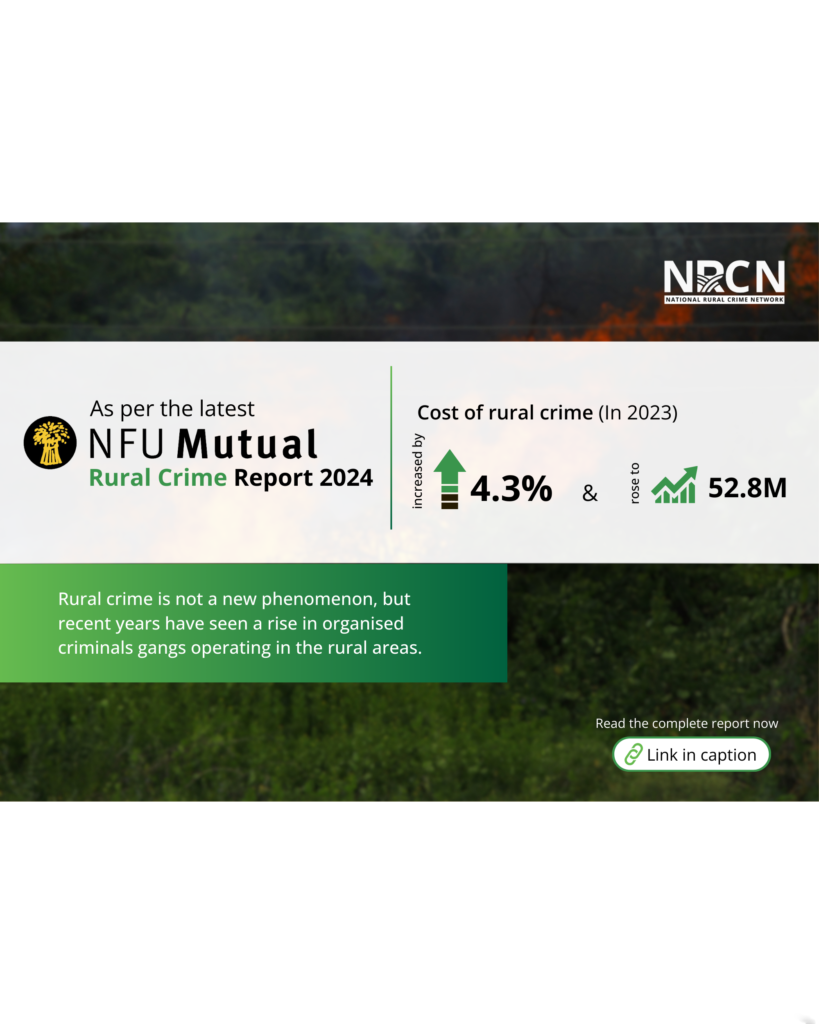
Rural Crime Report 2024 by NFU Mutual NFU Mutual’s latest figures show a 4.3% rise in 2023, pushing the cost of crime in rural areas to a staggering £52.8m. Criminal gangs are increasingly targeting farmyards and fields, capitalising on high inflation and strong resale markets both in the UK and overseas. The impact is felt across rural communities, with theft of farm machinery, tools, livestock, and even large-scale fly-tipping contributing to this surge. These crimes are not isolated incidents; they are often part of organised criminal networks that operate across regions, leaving rural communities vulnerable. Rural crime is a serious issue, but with vigilance and the right preventive measures, we can work together to reduce its impact. To know more, read NFU Mutual’s complete Rural Crime Report 2024 now: https://www.nfumutual.co.uk/farming/rural-crime/.
10 Worst affected Counties by Cost in 2023 as per NFU Mutual
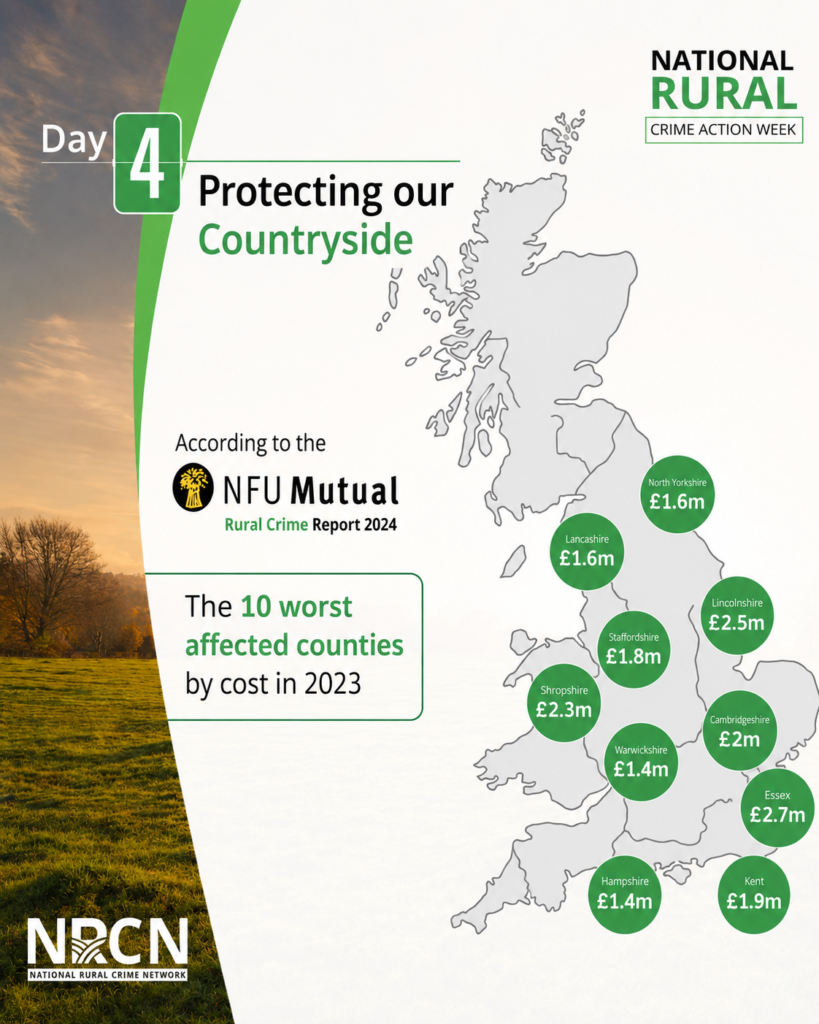
10 Worst affected Counties by Cost in 2023 as per NFU Mutual It is day 4 of National Rural Crime Action Week 2024, where our focus is on Protecting our Countryside! The NFU Mutual Rural Crime Report 2024 has revealed a stark reality that demands our attention. These figures highlight the urgent need for action and collaboration within our communities. This week is not just about raising awareness; it is about empowering residents and law enforcement to take a stand against rural crime. Let us unite for #ProtectingourCountryside.
How farms are being targeted by criminal gangs stealing machinery to order for Russia – ITVnews Segment
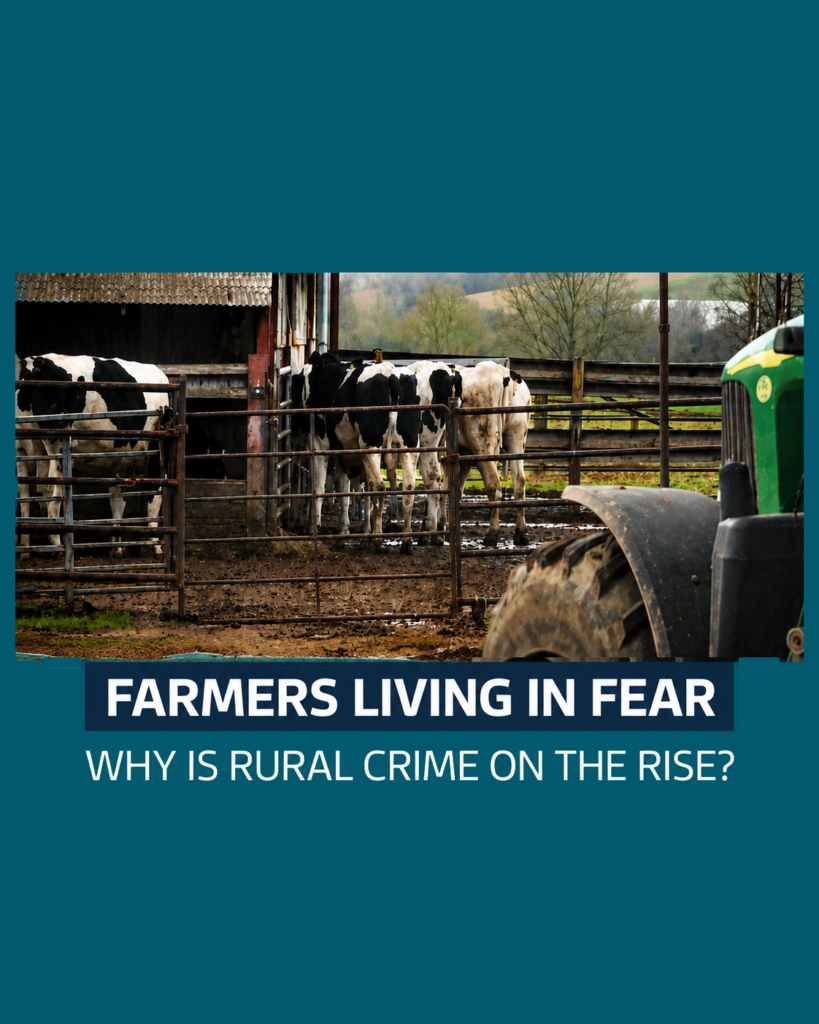
‘How farms are being targeted by criminal gangs stealing machinery to order for Russia’ – ITVnews Segment According to a recent segment by ITVnews featuring Chair of NRCN, Tim Passmore, an average of 170 agricultural vehicles are stolen every month! https://youtu.be/r2SQbMSupks?si=hWTY-KtLTdNgsZ44 Watch this interview featuring the Chair of the NRCN, Tim Passmore, to learn about how these stolen goods are making their way out of the country, leaving our farmers without the tools they need to make a living. As highlighted by Tim, criminals are increasingly targeting this equipment due to the high prices they can fetch on the black market. This calls for a stronger police presence in rural areas to deter criminals and improve response times. Additionally, farmers need access to more effective security measures, such as GPS tracking, forensic marking for equipment, and improved fencing. Watch the complete story on ‘how farms are being targeted by criminal gangs stealing machinery to order for Russia’ now!
Dr Kate Tudor on BBC Radio – Farming Today

dr. Kate Tudor on BBC Radio – Farming Today Let’s hear directly from Dr Kate Tudor – the author and researcher behind our latest report on ‘Rural Crime: Serious Organised and International’. https://youtu.be/gkrtcphXCJg Along with the key findings, Dr Tudor also discusses the misconceptions related to rural crime and the need for targeted strategies with BBC Radio 4 – Farming Today. Listen to the full segment!
The Telegraph Exclusive on the NRCN Report
The Telegraph Britain’s rural communities ‘being targeted by foreign drug gangs’ Read the exclusive article published by The Telegraph here. Download the NRCN Report on ‘Rural Crime: Serious Organised and International‘ for free.
Welcome from Tim Passmore, Chair of the National Rural Crime Network

Welcome from Tim Passmore, the National Rural Crime Network’s new Chair I am delighted to be able to write to you as both the re-elected Police and Crime Commissioner for Suffolk and the new Chair of the National Rural Crime Network. I have been the Vice-Chair of this organisation since we were formed in 2014. Things are better than they were then – there are more rural crime teams, more understanding of the problems faced in rural communities and more attention on the challenged faces in our most remote and sparsely populated areas. Better. But with a huge amount more to do. Rural crime is an issue that has never had the attention it deserved on the national agenda. In the past seven years since the NRCN was formed, we have made progress but let’s not underestimate the task that remains. As a farmer and a businessman, I have seen all too often at first-hand the impact of crime on rural communities. For some it still can seem trivial. Too many within government, within the police and within the country as a whole, question whether crime like the theft of machinery from a farm is a big deal. Those of us who live and work in rural areas know the impact it has – it can mean crops are ruined because they cannot be harvested, jobs and livelihoods of those employed are under threat and farmers’ families end up living in fear of criminals targeting their property. Since 2014, the NRCN has become a voice to be listened to when we have put the spotlight on some of the big issues we face – whether it’s the impact of domestic abuse or the growing threat of hare coursing. I want to pay tribute to Julia Mulligan as she steps down both as the Police, Fire and Crime Commissioner for North Yorkshire and as Chair of the NRCN. She has done a huge amount to improve the lives of people in rural areas, I thank her for everything she has done and wish her good luck in her new roles. As Chair, I will continue and strengthen our work so that we know the true picture of crime in rural communities, understand the impact it has, and use that to ensure the police, government and others find solutions to the challenges that have existed for too long and blighted the lives of too many. I am also looking forward to working alongside our new Vice-Chair, Peter McCall – the Police and Crime Commissioner for Cumbria – and our newly elected Executive Board. From our partner members: Countryside Alliance – Sarah Lee Crimestoppers – Mick Duthiie NFU – Sam Durham Rural Services Network – Graham Biggs And, from our Police and Crime Commissioner members: Devon & Cornwall –Alison Hernandez Essex – Roger Hirst Lincolnshire – Marc Jones Sussex – Katy Bourne I look forward to getting started and discussing all of the issues we face – and what we do about them – in the weeks and months ahead.